The Push for Universal Pre-K in New Jersey: Where We Stand
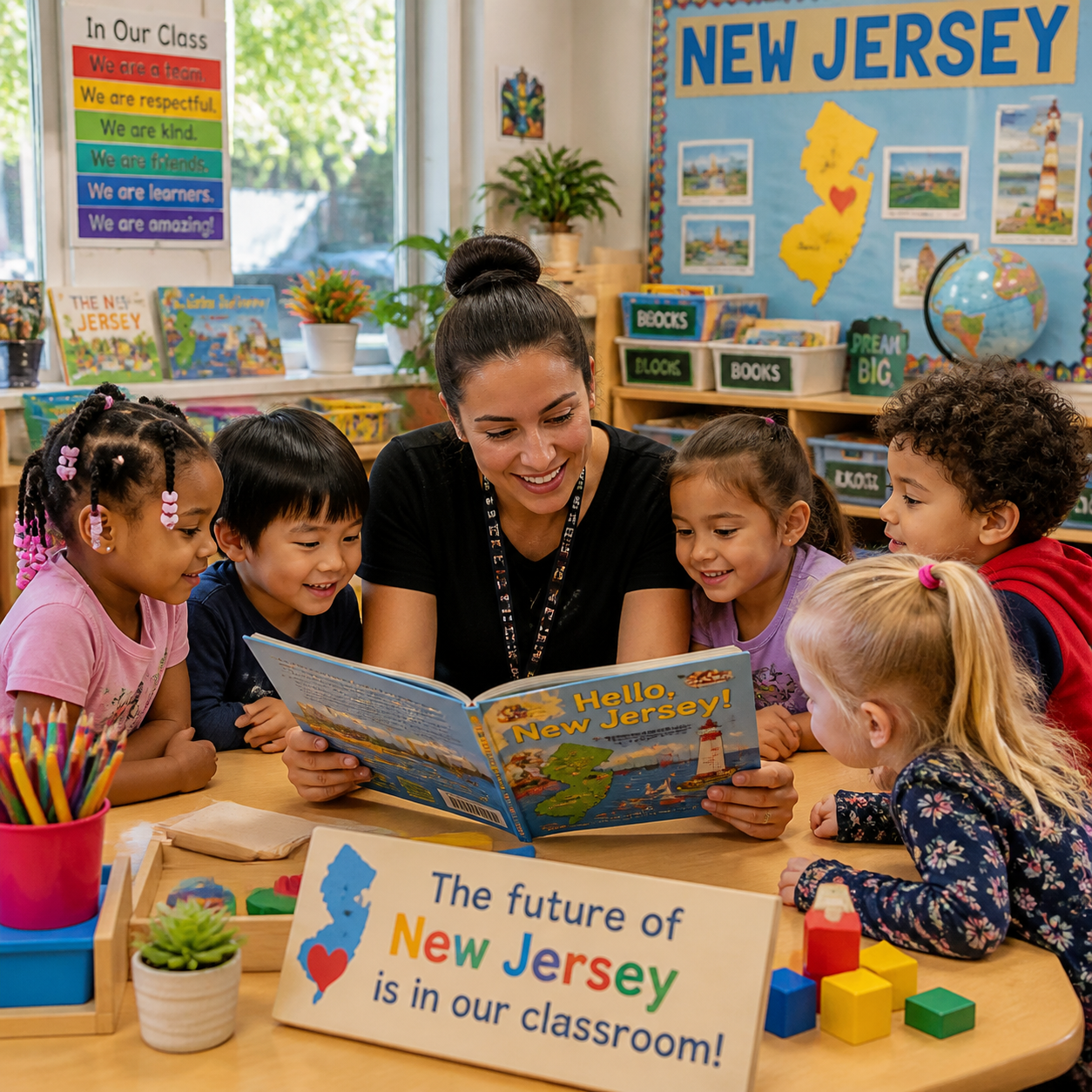
New Jersey has one of the nation’s strongest public preschool foundations, yet universal pre-K remains a work in progress. The state has expanded publicly funded early learning through Abbott preschool programs, school districts, and community-based providers, but access still depends heavily on where a family lives.
That distinction matters. A serious universal pre-K policy must address more than classroom seats. It must also consider educational equity, child care affordability, program quality, educator pay, inclusion, and continuity of care. Here is where New Jersey stands and what advocates, lawmakers, families, and providers should watch next.
What Universal Pre-K Means in New Jersey
Universal pre-K in New Jersey means publicly funded preschool access for all age-eligible children whose families want it, regardless of income or neighborhood. It generally refers to a preschool education program, often for three- and four-year-olds, rather than a promise of free, full-day, year-round child care.
New Jersey’s system does not operate as one single statewide preschool program. Eligibility, hours, enrollment procedures, and available providers can vary by district. In communities with established public preschool systems, families may receive a high-quality placement at no direct tuition cost. In other areas, families may find limited seats, waiting lists, part-day schedules, or no publicly funded option nearby.
Pre-K and child care overlap, but they serve different policy purposes:
- Pre-K focuses on early education, social development, language, and readiness for kindergarten.
- Child care supports supervision and learning across the workday, often including infants, toddlers, preschoolers, before-care, after-care, and summer coverage.
- Universal access addresses who can obtain a publicly supported preschool seat; it does not automatically guarantee coverage that matches every parent’s work schedule.
This is why a family may welcome free pre-K and still face substantial child care costs. A four-year-old might have a preschool placement from 8:30 a.m. to 2:30 p.m., while a parent works a longer shift. Universal pre-K can reduce educational costs without replacing the broader child care system.
How New Jersey Built Its Preschool System
New Jersey built its preschool system through court-driven education reforms, state preschool funding, and partnerships among school districts and community-based providers. The Abbott preschool programs established a major foundation for publicly supported early childhood education in the state.
The Abbott decisions required the state to improve educational opportunities in many high-poverty school districts. Preschool became a central part of that effort. Abbott districts developed programs for young children with standards intended to support classroom quality, family engagement, health services, and kindergarten preparation.
Over time, the model expanded beyond district-operated classrooms. In many communities, a child may attend a preschool classroom located in:
- A local elementary school operated by a school district.
- A licensed child care center or nonprofit early childhood program.
- A Head Start agency or another community-based preschool provider.
- A mixed-delivery network coordinated through district enrollment and state requirements.
The mixed-delivery approach has a practical advantage: it uses existing community capacity instead of requiring every classroom to be built inside a public school. It also creates a policy obligation. If community providers cannot afford to participate, families may lose access even when the state has allocated preschool funding.
The New Jersey Department of Education plays a central role in setting expectations, approving programs, distributing or administering state support, and overseeing parts of the preschool system. School districts typically help determine local enrollment, coordinate placements, and monitor services. The result is a system with substantial experience, but also uneven implementation.
More background on New Jersey’s early childhood policies and programs is available through the New Jersey Department of Education’s early childhood education resources.
Where the Expansion Effort Stands
New Jersey is moving toward broader preschool access, but it has not reached genuinely universal pre-K statewide. The state has an established infrastructure and a clear policy direction, while geographic availability, funding adequacy, and provider capacity remain unresolved.
The existing foundation is significant. Some districts offer extensive preschool services with multiple provider partners, full-day schedules, transportation options, and supports for children with disabilities. Other districts have fewer classrooms or are still developing the administrative systems needed to expand enrollment.
The central question is no longer whether early education deserves public investment. New Jersey has already answered that question through its preschool commitments. The harder questions are practical:
- Which children can enroll now, and which remain outside the system?
- Can the state fund enough seats to meet local demand?
- Will community-based preschool providers receive payments that cover the real cost of quality care?
- Can districts recruit enough qualified teachers, assistants, specialists, and administrators?
- Will expansion include children with disabilities, multilingual learners, and families with nontraditional schedules?
Progress should therefore be measured in more than announced funding. Useful indicators include the number of available seats, enrollment rates, waiting lists, classroom openings, provider participation, staff vacancies, and the distance families must travel to reach a program.
A district can technically offer pre-K while still leaving families behind if the only available classroom is far away, operates for too few hours, or cannot accommodate a child’s disability-related needs. Universal on paper is different from universal in practice.
Why Supporters Are Pushing for Universal Pre-K
Supporters see universal pre-K as both an educational equity policy and a family economic policy. Public preschool can give children stronger early learning opportunities while reducing one of the largest expenses facing working families.
Educational equity
Children do not enter kindergarten with equal access to books, stable housing, health care, enrichment, or early learning. High-quality pre-K cannot eliminate those differences, but it can provide a shared educational foundation. Well-designed programs support vocabulary, early mathematics, self-regulation, play, problem-solving, and relationships with trusted adults.
Equity also requires intentional inclusion. Children with disabilities need timely evaluations, individualized services, and classrooms prepared to support them. Multilingual learners need teachers who value home languages while building English proficiency. Low-income families should not be forced to navigate a patchwork of applications and waiting lists to secure a basic educational opportunity.
Affordability and workforce participation
Families often pay for preschool through a combination of wages, savings, subsidies, relatives’ unpaid labor, and unstable arrangements. Publicly funded pre-K can lower tuition expenses and make household budgets more predictable. Parents may also gain the ability to work more hours, accept a promotion, return to school, or remain in the workforce.
The economic case has limits. A preschool seat that ends before the workday does not solve the need for child care. Expansion works best when pre-K is coordinated with before-care, after-care, summer programs, transportation, and services for younger children.
Stronger early learning
Advocates are also pushing for a coherent progression from early childhood education into kindergarten and the primary grades. Children benefit when preschool and elementary educators share information, align expectations, and involve families in the transition. The aim is not to turn preschool into an academic pressure cooker. It is to make early learning intentional, play-based, inclusive, and responsive to children’s development.

The Implementation Challenges
The main implementation challenges are sustainable funding, workforce shortages, facilities, provider capacity, quality control, and uneven enrollment. Each issue can limit access even when policymakers agree with the goal of universal pre-K.
Funding and provider compensation
Preschool funding must cover the actual cost of qualified staff, benefits, classroom materials, facility maintenance, special education services, administration, and family support. If state payments lag behind costs, community-based preschool providers may decline public contracts or reduce other services to participate.
Choosing rapid expansion without adequate reimbursement can create a larger system with weaker programs. Choosing high standards without paying for them can push smaller nonprofits and child care centers out of the network.
Workforce and quality
New Jersey needs enough early childhood educators to staff new classrooms and retain experienced teachers. Compensation is central. Preschool educators perform demanding professional work, yet pay differences between school-based and community-based settings can make recruitment uneven.
Quality also involves more than credentials. Programs need manageable class sizes, planning time, coaching, mental health consultation, developmentally appropriate curriculum, and support for children who need specialized services.
Facilities, access, and enrollment
Some districts lack suitable classrooms, while others have space but struggle to recruit staff. Families may face transportation barriers or find that enrollment procedures are unclear. A seat in another municipality is not necessarily a usable seat for a parent without reliable transportation.
Enrollment gaps can have several causes: insufficient outreach, complicated applications, distrust based on past experiences, limited language access, or schedules that do not fit family life. Policymakers should treat low enrollment as a question to investigate rather than proof that demand is weak.
What Universal Pre-K Would Need to Succeed
A successful statewide program would combine stable funding, fair provider compensation, qualified educators, inclusive enrollment, family choice, and transparent accountability. Expanding the number of classrooms is necessary, but it is only one part of a durable system.
A useful way to evaluate proposals is the ACCESS framework: Availability, Cost, Continuity, Equity, Staffing, and Standards. Each element exposes a different failure point.
- Availability: Every community should have enough nearby seats, with attention to rural areas and neighborhoods with limited preschool capacity.
- Cost: Public funding should remove tuition barriers while addressing before-care, after-care, and summer needs where possible.
- Continuity: Families should experience clear transitions between preschool, kindergarten, child care, and specialized services.
- Equity: Enrollment and classroom design must include children with disabilities, multilingual learners, and families facing housing or transportation instability.
- Staffing: Educators need competitive wages, benefits, professional development, and career pathways.
- Standards: The New Jersey Department of Education and local partners should monitor quality without imposing unfunded requirements that smaller providers cannot meet.
Family choice should remain meaningful, but choice requires real options. A family cannot choose among providers when only one classroom is available or when payment rates force community programs to withdraw. Accountability should publish understandable information about seats, enrollment, staffing, inclusion, and program quality without stigmatizing children or neighborhoods.
What to Watch Next in New Jersey
The next signs of progress will be concrete changes in seats, funding, staffing, provider participation, geographic access, and inclusion. Legislative proposals and budget decisions matter, but implementation data will show whether the system is reaching families.
Readers can evaluate future plans by asking:
- Does the New Jersey Legislature provide recurring funding rather than short-term expansion money?
- Are state preschool payments high enough for community-based providers to offer competitive wages and sustain quality?
- Do school districts publish clear enrollment rules, deadlines, waiting-list information, and language-access options?
- Are new classrooms opening in communities with the greatest unmet need?
- Can children with disabilities and multilingual learners enroll without avoidable delays?
- Are educator salaries and working conditions improving across both district and community settings?
- Does the program connect families to child care beyond the preschool day?
New Jersey already has the policy experience to build on its Abbott preschool programs. The unfinished work is making access dependable across every community while protecting quality and strengthening the broader early childhood education workforce.
For families and advocates, the clearest standard is simple: a universal promise should produce a usable seat, at no unaffordable tuition cost, with qualified educators and meaningful support. Until those conditions are available statewide, the push for universal pre-K remains an important policy direction rather than a completed achievement.
Universal Pre-K in New Jersey: Frequently Asked Questions
What is universal pre-K in New Jersey?
Universal pre-K means publicly funded preschool access for all age-eligible children who want a placement, regardless of family income. In New Jersey, availability still varies by district, and pre-K does not automatically mean full-day, year-round child care.
Is pre-K free for all New Jersey families?
Families generally do not pay tuition for a publicly funded preschool seat when they qualify for and obtain one. However, access is not yet uniform statewide, and families may still pay for transportation, extended-day care, summer care, or services outside the preschool program.
How do school districts and community providers deliver preschool?
School districts may operate classrooms directly or contract with community-based preschool providers, including child care centers, nonprofits, and Head Start agencies. This mixed-delivery model expands capacity but depends on adequate funding, coordination, and provider participation.
Why is expanding universal pre-K difficult?
Expansion requires more than state preschool funding. New Jersey must secure facilities, recruit educators, compensate providers fairly, support children with disabilities, reach families who face enrollment barriers, and coordinate preschool with the child care system.
What would a successful statewide program require?
A successful program would offer reliable geographic access, stable funding, well-compensated educators, inclusive classrooms, clear accountability, and schedules that connect with families’ child care needs. It would also maintain strong standards without excluding community providers that serve local families.