The Link Between Healthcare Access and Economic Stability in New Jersey
Healthcare access is closely connected to economic stability in New Jersey. When people can afford health insurance and get timely care, they have a better chance of managing health needs without letting medical costs or untreated conditions overwhelm household budgets and daily life.
The relationship runs in both directions. Income, job conditions, transportation, and where someone lives can all shape access to care. That makes healthcare a community and policy concern as well as a personal one: coverage and services can help people navigate hardship, though they cannot solve every economic barrier on their own.
Why healthcare access is an economic issue
Healthcare access supports economic stability by helping people protect their health, preserve household resources, and stay connected to work and community life. Without affordable, timely care, an illness can create financial strain that reaches beyond a medical bill.
A worker who cannot get a needed appointment may have to miss more time later, while a parent facing an unexpected expense may have less money for rent, food, or utilities. These pressures are not simply the result of individual choices. Insurance rules, provider availability, transportation, paid leave, and the cost of care all affect whether someone can get help when they need it.
In New Jersey, access also varies by income, location, language, disability, and other circumstances. A health plan may technically be available while remaining unaffordable after premiums, deductibles, and copayments. Likewise, having coverage does not guarantee a nearby provider who accepts it or an appointment at a workable time. Coverage matters most when people can use it.
Viewing healthcare as part of economic infrastructure helps explain why access has wider effects. Stable health can support caregiving, education, and participation in local businesses and workplaces. But the connection is not automatic: healthcare policy works alongside wages, housing, transportation, and other conditions that shape financial security.
How coverage and affordability shape household finances
Health insurance coverage can reduce the financial risk of medical care, but premiums and out-of-pocket costs still affect whether a household can afford both treatment and everyday expenses. Coverage gaps can make that strain sharper.
When people lack insurance or face a gap between plans, they may postpone care because they cannot predict the cost. Even insured households can encounter high deductibles, copayments, prescription costs, or services their plan does not cover. A single bill may be manageable for one family and destabilizing for another, especially when savings are limited or income changes from week to week.
Medical debt can follow an unexpected illness or a period without adequate coverage. People may draw down savings, use credit, delay other bills, or arrange payment plans. Those choices can make it harder to maintain housing or build an emergency fund. The risk is not limited to people who are uninsured: insurance reduces exposure but does not remove every cost.
To assess whether coverage is genuinely affordable, households and policymakers can look beyond the monthly premium:
- Total cost: Consider premiums alongside deductibles, copayments, prescriptions, and likely out-of-network expenses.
- Practical access: Check whether local clinicians accept the plan and whether appointments are available in a reasonable timeframe.
- Continuity: Consider how changing jobs, income, or eligibility could interrupt coverage or treatment.
These factors explain why expanding enrollment is important but not sufficient. Affordable coverage should help people obtain necessary care without forcing impossible trade-offs in the household budget.
The role of timely and preventive care
Preventive and timely care helps people address health needs earlier, before those needs become harder to manage in everyday life. Routine access can also support ongoing care for conditions that require regular attention.
Preventive care includes services such as screenings, vaccinations, and checkups, based on a person’s age, health history, and clinical guidance. Timely primary care can give patients a place to discuss new symptoms, review medications, and coordinate referrals. These services do not prevent every illness or guarantee lower costs, but they can help people make informed decisions and avoid some delays in care.
Access depends on more than knowing that a service exists. A person may need a provider who accepts their health insurance, transportation to the clinic, interpretation, accessible facilities, or time away from work. If those pieces are missing, even a covered preventive visit may be out of reach.
For households, one useful test is whether care is available before a problem becomes a crisis: Can someone book a routine appointment without taking on unmanageable costs? Can they return for follow-up? Can they fill a prescribed medication? These questions make healthcare affordability practical rather than theoretical. Better access can support stability, though it should be paired with other supports such as paid time off and reliable transportation.
Healthcare access and New Jersey’s workforce
Access to healthcare can help workers maintain employment by making it easier to manage health needs and attend to care before a condition disrupts work. The relationship depends on job quality, benefits, scheduling, and the availability of local providers.
Workers without paid sick leave or flexible schedules may delay appointments because leaving work means losing income or risking their position. People in part-time, temporary, or lower-wage jobs may also have fewer employer-sponsored benefits. A coverage gap during a job change can interrupt care at a moment when a household is already adjusting to different income or work arrangements.
Employers and public programs both shape this landscape. Health insurance offered through work can provide a route to coverage, but it may not be accessible or affordable for every worker. Medicaid and other coverage options can matter for people whose income, employment, or family circumstances change. A resilient workforce requires policies that recognize these transitions rather than assuming every worker has a stable job with comprehensive benefits.
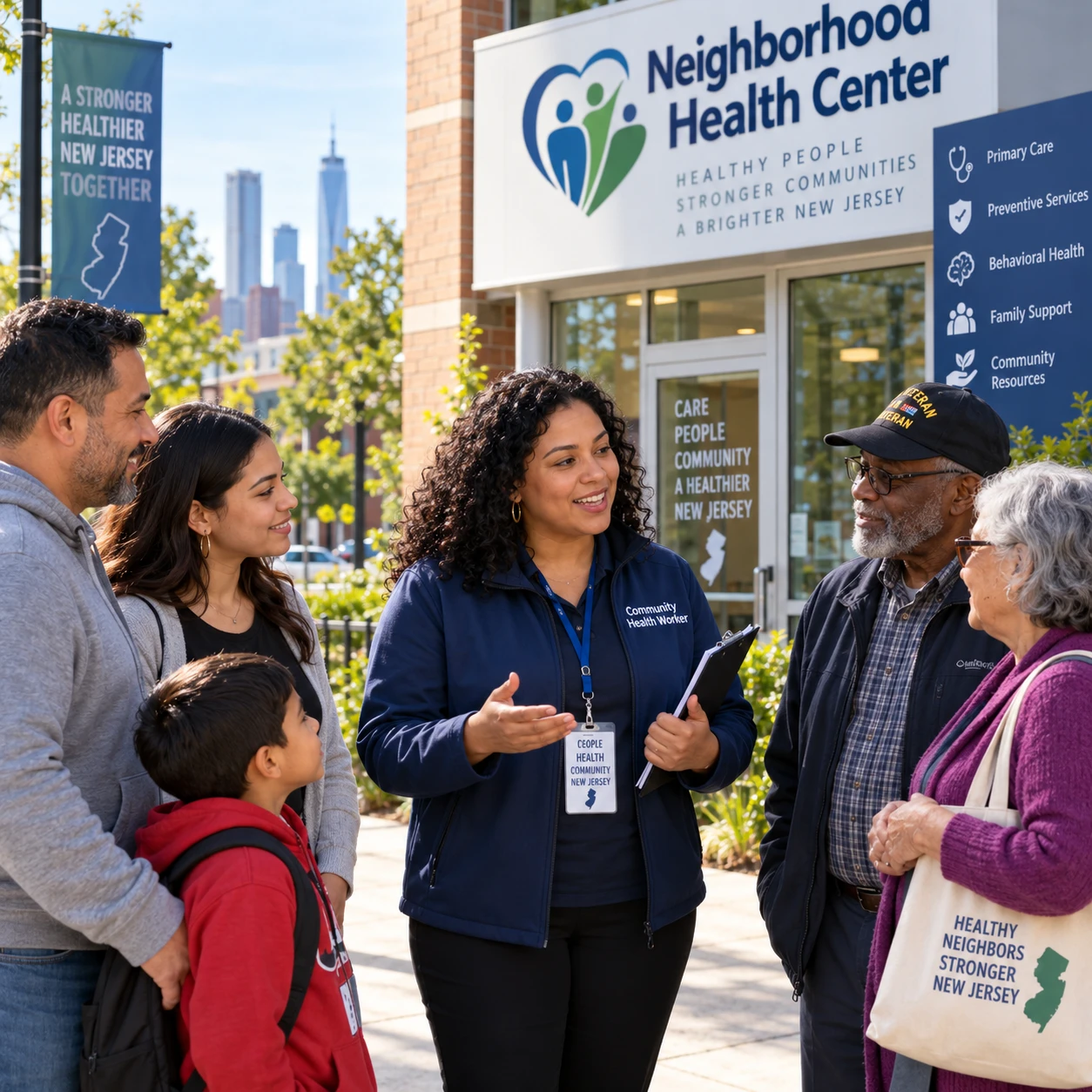
Community health centers can also make care more reachable for residents who face cost, location, or provider barriers. They often provide primary care and may connect patients with other services, depending on the center. Their capacity and appointment availability vary, so they complement rather than replace a strong, accessible healthcare system.
Policy tools that can strengthen access and stability
New Jersey can strengthen healthcare access through a combination of Medicaid, affordable insurance, community health centers, and practical supports that help residents use care. No single policy removes every barrier, so effective approaches should consider both coverage and real-world access.
Medicaid provides health coverage to eligible people under federal and state rules. It can be an important source of coverage for people with limited incomes, children, pregnant people, and others who qualify. Eligibility, enrollment, and plan details matter, and residents can review current information through the New Jersey Medicaid program. Maintaining clear enrollment assistance and minimizing avoidable coverage interruptions can help eligible residents stay connected to care.
Other policy priorities can address affordability and service availability:
- Make coverage usable: Pay attention to premiums, deductibles, prescription costs, provider networks, and continuity when a person’s circumstances change.
- Support community health centers: Invest in accessible primary care and the staffing needed to serve communities with limited provider options.
- Reduce practical barriers: Improve language access, transportation connections, disability access, and appointment options where local needs support them.
- Coordinate with workplace protections: Paid sick leave and predictable scheduling can make it easier to attend appointments without sacrificing wages.
Each choice involves trade-offs. Expanding benefits requires sustainable funding and adequate provider capacity; adding coverage without enough clinicians may leave patients waiting. Policymakers should track measures such as enrollment continuity, appointment availability, affordability, and preventable interruptions in care, while avoiding promises that a single program will solve broader economic insecurity.
Building a healthier and more economically secure New Jersey
A more economically secure New Jersey needs healthcare that people can afford and actually reach. Reliable coverage, timely care, and community-based services can help households manage health needs while supporting participation in work and community life.
The connection is strongest when policy addresses the full path from eligibility to care: people need to know what coverage they qualify for, afford its costs, find a provider, get an appointment, and continue treatment when circumstances change. Gaps at any point can weaken the value of coverage and deepen financial strain.
Progress should be judged by whether residents can use care without putting basic household needs at risk, not by enrollment numbers alone. That means listening to communities most affected by cost and access barriers, supporting Medicaid and community health centers, and examining how health policy interacts with employment, transportation, and paid leave.
Healthcare access cannot guarantee economic security, and economic policy cannot replace medical care. Together, however, they shape whether New Jersey residents have a fair chance to stay healthy, support their families, and contribute to their communities.