How Corporate Tax Breaks Can Hurt New Jersey’s Working Families

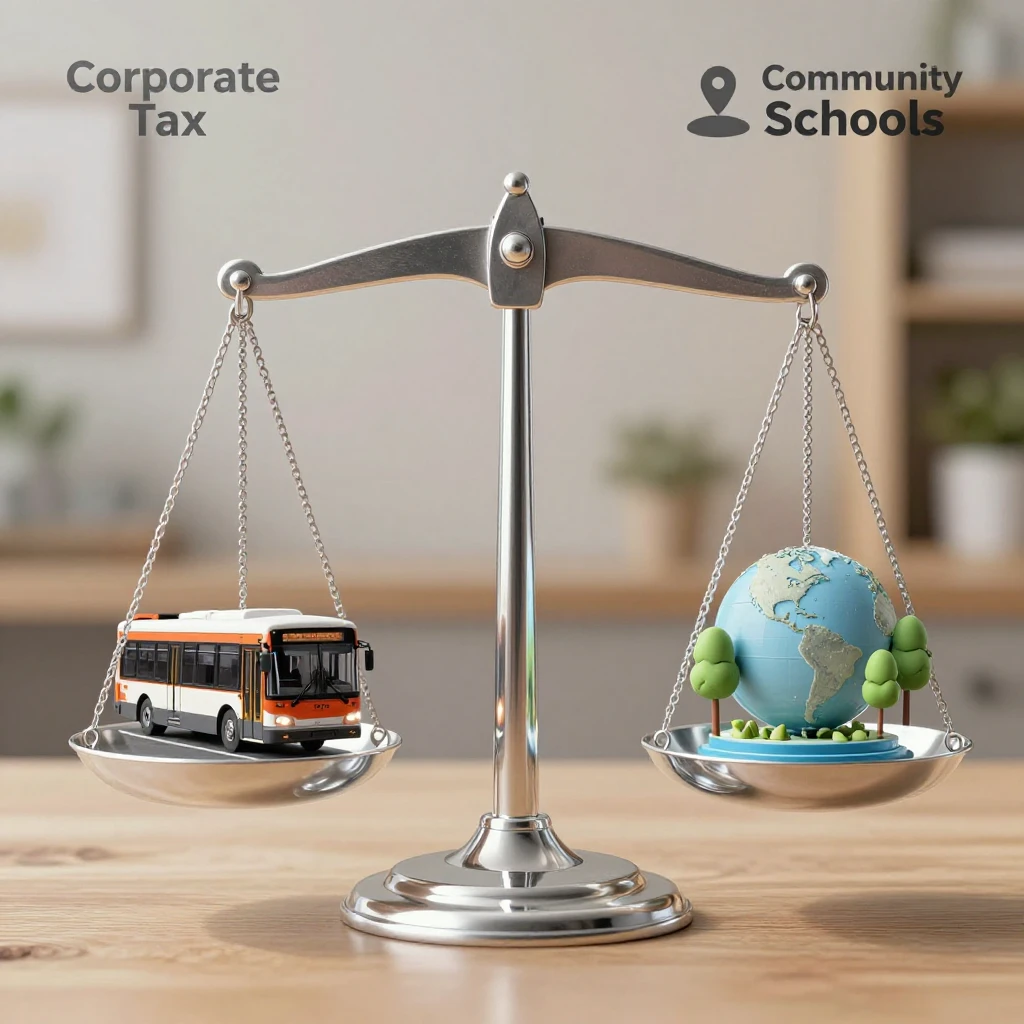
Corporate tax breaks are often promoted as a way to attract businesses, support jobs, and strengthen New Jersey’s economy. But when a company pays less tax, the state has fewer dollars available for shared priorities unless other revenue fills the gap. That trade-off matters to working families who rely on public schools, transportation, infrastructure, and other services.
The effect is not automatic or identical for every incentive. A well-designed program may produce public benefits that outweigh its cost; a poorly monitored one can shift risk to residents while delivering little that would not have happened anyway. The key is to compare promised results with the revenue forgone and the needs those dollars could otherwise support.
What corporate tax breaks are—and why New Jersey offers them
Corporate tax breaks are tax reductions or other financial incentives that lower a business’s tax bill, often in exchange for promised investment, job creation, or business activity. New Jersey offers incentives to pursue economic development goals, but the form, cost, and conditions of each program can differ.
Some incentives reduce taxes a company owes; others allow tax credits to be carried forward or transferred, or provide benefits tied to investment and hiring. A credit may be earned only after a company meets requirements, while a grant or tax agreement may involve a different schedule and oversight process. These distinctions matter: a deferred tax payment is not the same as a permanent tax reduction, and a conditional credit is not necessarily a guaranteed benefit.
The stated rationale is that a business may choose New Jersey because of an incentive, then hire workers, invest in property, or expand local economic activity. That could generate wages and additional tax revenue. But the central question is additionality: would the company have made the same investment or created the same jobs without the deal? If so, the incentive may reward a decision already made rather than change it.
New Jersey’s incentive programs should be assessed deal by deal. A proposal that supports a genuinely new project with enforceable commitments is different from one that mainly subsidizes a company to stay in a location it had no realistic plan to leave.
The public-revenue trade-off
The public-revenue trade-off is the value of taxes a state gives up compared with the measurable public benefit an incentive produces. When corporate tax revenue is reduced or delayed, New Jersey must account for that gap through other revenue, lower spending, borrowing, or a different budget choice.
State revenue pays for more than one service, and no single tax break automatically triggers a specific cut. Still, revenue has competing uses. Dollars forgone through an incentive cannot also be spent on education funding, transportation and infrastructure, or other public priorities unless the state raises or reallocates money elsewhere.
This is the opportunity cost of a tax break: what residents might have received if the money had remained available for another purpose. The cost is not always the full face value of an announced credit. Some credits may never be earned, while others may be used over several years. A credible review should track actual benefits claimed, when they are claimed, and the resulting effect on state revenue.
New Jersey’s budget includes many revenue sources and spending obligations, so corporate incentives are only one factor in public-service funding. They should not be treated as the sole cause of a school budget pressure or a transportation problem. But lawmakers should make their costs visible alongside other budget choices, rather than discussing promised jobs without discussing the public resources committed.
For context on how state finances are presented, residents can review the New Jersey Office of Management and Budget. Budget documents do not answer every question about a specific deal, but they help place incentive costs within the state’s wider fiscal picture.
How budget choices reach household budgets
Corporate tax breaks can affect working families indirectly when they change the resources available for public services or shift costs elsewhere. The connection depends on how the state responds to forgone revenue, so it would be inaccurate to say that any particular incentive directly raises a family’s bills.
If a revenue shortfall contributes to a spending constraint, families may notice consequences through the quality or availability of services. Education funding supports public schools and the staff, programs, and facilities students depend on. Transportation and infrastructure spending affects roads, bridges, and transit systems people use to get to work, school, and appointments. The path from one tax deal to one household’s experience, however, can be complex and affected by many other budget decisions.
Families may also feel the impact if the state covers a gap by raising other taxes or fees, borrowing, or asking local governments to shoulder more costs. Each option distributes burdens differently. For example, local property taxes are affected by multiple factors, including local spending and state aid; a corporate incentive alone cannot explain a change in a household’s tax bill.
A useful way to follow the effect is to ask three questions: What revenue is forgone? What spending or revenue choice responds to it? Which residents rely on the affected service or bear the replacement cost? This keeps the focus on real household stakes without overstating a direct cause-and-effect relationship.
Who benefits, and who carries the risk?
Companies receive the direct financial benefit of corporate tax incentives, while workers and communities may gain if the deal leads to additional jobs, investment, or wider economic activity. Residents also carry some risk when public revenue is committed without strong evidence that those benefits will materialize.
The distribution depends on the deal. A company may receive a tax benefit while a community sees new jobs or business activity. But the headline number of jobs promised does not show whether positions are new, permanent, full-time, accessible to local workers, or paid enough to support a family. Nor does a new project automatically guarantee that nearby residents benefit equally.
Corporate accountability depends on clear conditions and follow-through. If a company receives a benefit before meeting its commitments, or if the state cannot verify what was delivered, residents may bear the opportunity cost without a reliable public return. Strong agreements can include reporting requirements, job-quality standards, deadlines, and provisions to recover benefits when promises are not met.
There is also a risk of confusing economic activity with net public value. A company’s expansion can be real and still cost more in tax relief than it returns to the state. Conversely, an incentive may be worthwhile if it changes a company’s decision and produces benefits that are both measurable and broadly shared. The answer requires evidence, not assumptions about either business or government.
Questions to ask when evaluating a tax-break deal
To evaluate a New Jersey tax-break deal, compare its public cost with results that are additional, measurable, and enforceable. A short set of practical tests can help residents distinguish a persuasive proposal from a promise with too little accountability.
- Is the cost transparent? Ask how much revenue the state expects to forgo, when the benefits will be claimed, and whether the estimate includes the full term of the deal.
- Would the project happen without the incentive? Look for evidence that the tax break changes a business decision rather than rewarding investment that was already planned.
- Are the outcomes specific? Job targets should distinguish new from existing positions and explain the expected wages, duration, and location of the work.
- Can the public verify performance? Require regular reporting, independent review where appropriate, and clear consequences if commitments are missed.
- What alternatives were considered? Compare the incentive with options such as workforce training, infrastructure upgrades, or support for small businesses, and explain why the proposed deal offers better public value.
- Who benefits and who bears the cost? Consider effects on workers, nearby residents, local governments, and households that depend on public services.
These questions form a practical public-value test: cost, additionality, outcome, accountability, and distribution. A proposal that cannot answer them may be too uncertain to justify a long-term commitment of public revenue. Even a strong proposal should be revisited as results come in.
A fairer approach to economic development
A fairer approach to economic development makes incentives conditional, transparent, and accountable, while comparing them with other ways to support New Jersey’s economy. The goal is to secure broad public benefits rather than treat a company’s tax reduction as proof of success.
That starts with publishing understandable cost estimates and reporting what companies actually receive. Agreements can set clear goals for job creation, wages, investment, and timelines, with consequences when recipients fall short. Independent evaluation can test whether a program changed business behavior and whether its gains justify the revenue it used.
New Jersey can also weigh incentives against investments that serve a wider range of residents. Reliable transportation and infrastructure, strong education funding, and workforce development can help workers and businesses across multiple communities. Those investments have costs and do not guarantee a particular economic outcome either. They should be judged with the same discipline: who benefits, how results are measured, and whether the public value matches the spending.
For working families, the core issue is fairness in both directions: companies should have a reasonable path to invest and grow, and residents should be able to see what they receive in return for public support. A corporate tax break is justified when evidence shows that it creates additional, durable benefits and the public can hold recipients to their commitments. When the evidence is weak, the state should be willing to revise or reject the deal.
Frequently asked questions
These answers summarize what corporate tax breaks mean for New Jersey’s budget and how residents can assess their public value. The effect of any particular program depends on its rules, cost, and results.
What is a corporate tax break?
A corporate tax break is a reduction, credit, exemption, or deferral that lowers a company’s tax obligation. New Jersey may use incentives to encourage investment or job creation, usually with rules that vary by program.
Do corporate tax incentives create jobs?
They can contribute to job creation when they change a company’s decision, but a promise alone does not prove that the incentive caused the jobs. Evaluation should check whether positions are new, sustained, and consistent with the deal’s commitments.
How can tax breaks affect public services?
By reducing or delaying state revenue, an incentive can limit resources available for public priorities or require another budget response. The effect on education, transportation, or household costs is indirect and depends on the state’s overall fiscal choices.
What should New Jersey disclose about incentive programs?
New Jersey should make program costs, recipient benefits, eligibility rules, promised outcomes, and actual results easy to find. Public reporting should also show whether companies met commitments and what happens when they do not.