A Beginner’s Guide to Contacting Your NJ State Legislator
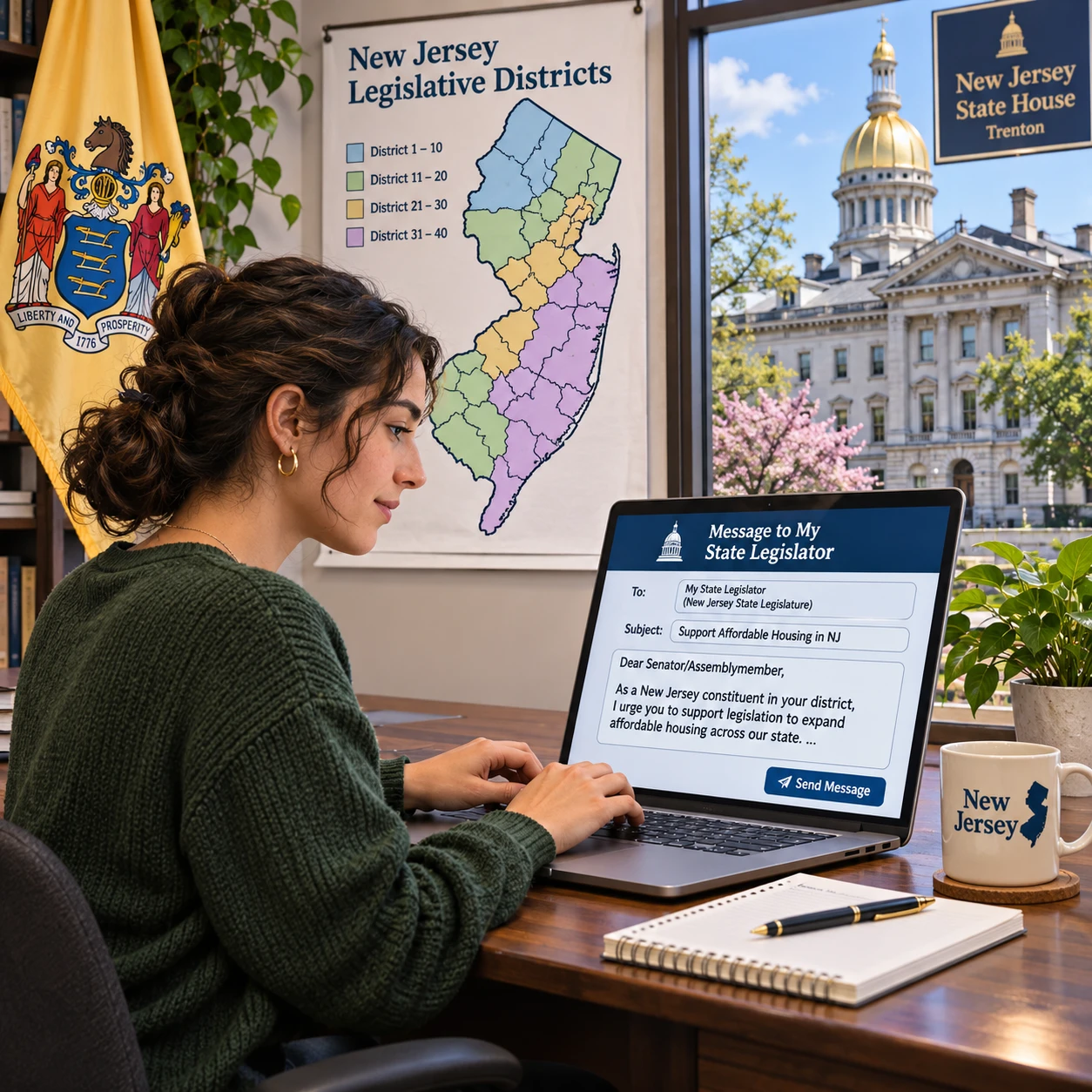
Contacting a New Jersey state legislator can feel unfamiliar, especially if you have never called a legislative office or written about a bill. The basic process is manageable: find the right elected officials, explain how an issue affects your community, and ask for a concrete action.
A state senator or Assembly member works on state policy, not federal matters handled by members of Congress. A thoughtful message may not determine a vote by itself, but constituent experiences help offices understand what people in their districts need. Advocacy is most effective as one part of sustained, collective participation.
Who represents you in the New Jersey Legislature?
Your New Jersey legislators are the state senator and two Assembly members who represent your legislative district. Find your district using your home address, then contact the legislative office of the official whose role or committee work best fits your concern.
The New Jersey Legislature has 40 legislative districts. Each elects one state senator and two members of the General Assembly, commonly called Assembly members. Your district is based on where you live, not where you work or attend school.
Use the official New Jersey Legislature roster to look up legislators by address or district and find their contact information. Check that the address is your current residence. If you are unsure, confirm the district through the state’s official lookup before sending a message.
Once you have the names, review each legislator’s official page. It usually lists the legislative office phone number, email or contact form, and committee assignments. A committee is a group that reviews bills on a subject area, such as education, health, or transportation. If a bill is under review, the committee and its members may be especially relevant contacts.
Start with the official who represents you. Constituents are people who live in an elected official’s district, and their firsthand accounts give an office useful local context. You can also contact other legislators when they have a relevant committee role, but be clear about where you live and why you are reaching out.
When should you contact a state legislator?
Contact a state legislator when a New Jersey law, budget decision, or state agency policy affects you or your community. State legislators can consider bills, vote on the state budget, and raise concerns about how state programs and rules work.
Common state-level topics include public schools, housing, health care, workers’ rights, transportation, environmental protections, and state taxes. You might contact an Assembly member or senator about a proposed bill, ask for support or opposition, or describe a gap in a state service. A local issue may also have a state dimension if state law or funding shapes the solution.
Before reaching out, identify the decision you want the legislator to influence. If you know a bill number, include it; if not, describe the policy clearly. You can search the Legislature’s bill information and calendars to check a proposal’s status, sponsors, and committee referral.
Timing can matter. A message sent before a committee vote or public hearing may arrive when the issue is actively under consideration. Still, you can contact legislators outside a vote window: policy development, budget choices, and constituent services continue throughout the year. For federal issues such as immigration law or Social Security, contact your U.S. representative or senators instead.
Choose how to reach out
Email, phone calls, office visits, and public hearings are all ways to contact a New Jersey legislator. Choose the format that fits your goal, the timing, and how much detail you need to share.
- Email or a contact form: Best for a clear written request, links to evidence, or a record you can refer to later. Keep the message focused and include your district or town.
- Phone call: Useful when a vote or hearing is approaching, or when you want to register a position quickly. A staff member may answer or take a brief message. State your name, town, position, and request.
- Office visit or meeting: A scheduled meeting gives you time to explain a complex concern or share local experience. Contact the legislative office first to request a meeting and ask whether the legislator or a staff member will attend.
- Public hearing: A hearing lets residents provide testimony on a specific bill or policy in a public setting. Check the Legislature’s hearing notice for registration instructions, speaking limits, location, and submission deadlines.
There is no single best channel. Email gives you room to organize your points, while a phone call can be easier for a time-sensitive message. A meeting takes more preparation, and a public hearing may have strict time limits. If you use more than one method, keep the request consistent rather than sending repeated versions of the same message.
Prepare a clear, actionable message
To prepare an effective message, identify the issue, explain its local impact, and make one specific request. A short, accurate note is easier for a legislative office to understand and route than a long message with several unrelated demands.
Use this simple structure:
- Introduce yourself: Give your name and town, and say you are a constituent if you live in the district.
- Name the issue: Identify the bill number or policy topic. State whether you support, oppose, or want changes to the proposal.
- Explain the impact: Describe what the issue means for you, your family, workplace, or community. A specific local example can make the policy consequences clearer.
- Make the ask: Request an action the legislator can take, such as supporting a bill, voting against it, proposing an amendment, or asking questions at a committee hearing.
- Close respectfully: Thank the office and provide a way to reach you if staff need clarification.
For example: “I live in [town] and am writing about [bill number or policy]. The current proposal would affect [specific local impact]. Please support [specific action]. I would appreciate knowing the senator’s position.” Replace the brackets with accurate details rather than sending the template unchanged.
Keep the message focused on the decision in front of the legislator. If you are discussing a public hearing, follow its instructions for written testimony or speaking requests; an email to an office may not count as formal testimony.
What to include—and what to avoid
Include your name, town, the issue, a brief local example, and a direct request. Avoid personal attacks, unsupported claims, and pressure tactics that distract from your policy argument.
Legislative offices handle messages from residents and people outside their districts, so identifying your community helps staff understand your connection to the issue. When you cite a statistic or claim, use a reliable source and describe it accurately. If you are sharing a personal experience, explain what happened without assuming that one example represents every resident.
Respectful does not mean vague. You can be firm about the consequences of a policy while addressing the legislator and staff professionally. Make one main request and, if useful, one brief supporting point. A concise message is more likely to be read quickly, though a complex issue may need a meeting or supporting document.
Common mistakes are easy to avoid:
- Contacting the wrong level of government: People may write to a state legislator about a federal program. Check whether New Jersey law or a state agency controls the issue, then contact the appropriate official.
- Sending a message with no clear ask: A long explanation can leave staff unsure what action you want. Put your request near the beginning or end in one direct sentence.
- Using inaccurate or inflammatory claims: Frustration is understandable, but claims that cannot be verified can weaken your credibility. Check details and describe the policy impact plainly.
Follow up and stay involved
Follow up if you have not received a response after a reasonable interval, and keep tracking the issue through bill updates, committee activity, and public hearings. One message may not change a legislator’s position, but ongoing constituent contact can contribute to a broader record of public concern.
After sending an email or leaving a phone message, allow the office time to respond. If the matter is urgent, such as an upcoming committee vote, say so clearly and consider a brief call as well. If you receive a response, thank the staff member and ask a focused follow-up question if anything remains unclear.
To stay involved, check the bill’s status, calendar, committee referral, and hearing notices through the New Jersey Legislature’s website. You can also share accurate updates with neighbors, coordinate with community groups, submit testimony, or attend a public hearing. These actions help connect individual experiences to sustained advocacy.
Think of the process as a cycle: identify the decision, communicate a local impact, make a specific request, then follow the outcome. That approach works whether you are contacting a state senator about a budget choice or an Assembly member about a bill. It keeps your advocacy focused and gives you a practical way to participate beyond election season.
Frequently asked questions
How do I find my New Jersey legislative district? Use your home address in the official New Jersey Legislature roster or district lookup. Your district determines your state senator and two Assembly members.
Should I contact my senator or Assembly member? Contact the official who represents you and is best placed to act on the issue. Committee assignments and the bill’s status can help you decide whom to contact first.
What should I include in an email to a legislator? Include your name, town, the bill number or policy, a brief explanation of its local impact, and one specific request.
Is it better to call or email? Neither is always better. Email works well for detail and documentation; a phone call can suit a time-sensitive message. Choose the format you can use clearly.
What if I don’t receive a response? Follow up once after a reasonable interval, or call the legislative office if timing matters. Staff may be handling a high volume of messages, so a delayed reply does not necessarily mean your concern was ignored.